

Why Enterprise Transformations Lose Control—and How to Regain It
Updated: Aug 11
Enterprise transformation has become one of the defining challenges facing executive leadership.
Organizations continue to invest significant resources in digital transformation, operating model redesign, regulatory change, mergers, technology modernization, and strategic transformation programs. Yet despite these investments, many transformations fail to achieve their intended outcomes—not because the strategy was incorrect, but because execution gradually becomes more difficult to control.
The warning signs rarely appear suddenly. Delivery reporting becomes increasingly optimistic while confidence quietly declines. Governance meetings generate more status updates than decisions. Dependencies increase, priorities shift, risks accumulate, and accountability becomes fragmented across business units, technology teams, vendors, and external partners.
By the time executives recognize that delivery is at risk, recovering momentum becomes significantly more difficult and expensive.
Transformation success depends not only on strategic ambition, but also on the organization's ability to maintain leadership alignment, effective governance, disciplined decision-making, and execution control as complexity increases. Losing control is not inevitable. Organizations that consistently deliver complex transformations establish the structures, leadership behaviors, and execution disciplines required to maintain control throughout the transformation lifecycle.
This article explores why enterprise transformations lose control, the business consequences of execution failure, and the practical principles organizations can use to restore confidence and deliver strategic outcomes.

Figure 1: From complexity to control enterprise transformation framework
Executive Summary
Most enterprise transformations do not fail because of poor strategy or insufficient investment. They fail because execution becomes increasingly difficult to manage as complexity grows.
Large-scale transformations involve multiple initiatives operating across business functions, technology platforms, regulatory environments, vendors, and geographic locations. Without effective governance and decision-making mechanisms, complexity gradually overwhelms the organization’s ability to execute.
Control is typically lost when governance becomes focused on reporting rather than decisions, strategic priorities compete without effective portfolio alignment, risks and dependencies remain unresolved, and leaders lack confidence in delivery visibility.
Organizations that consistently execute successfully build six critical capabilities:
Executive ownership with clear accountability
Governance that accelerates decisions
Portfolio alignment with strategic priorities
Transparent execution visibility
Active dependency and risk management
Early intervention when execution begins to drift
Transformation success is rarely determined by methodology alone. It depends on the organization's ability to sustain execution discipline throughout the entire lifecycle.
Transformation success depends not only on strategic ambition, but on the organization's ability to maintain governance, decision discipline, and execution visibility as complexity increases.
The Growing Complexity of Enterprise Transformation
Today's enterprise transformations are fundamentally different from those of the past.
Organizations are no longer managing isolated projects. Instead, they are executing interconnected portfolios of change that span technology, operations, regulatory requirements, customer experience, and organizational capability.
A single transformation initiative may involve:
Technology modernization
Cloud migration
Process redesign
Regulatory compliance
Data transformation
Organizational change
Customer experience improvements
Cybersecurity enhancements
Each initiative introduces new dependencies, and each dependency increases execution risk.
As complexity increases, traditional delivery models often struggle to provide the visibility and coordination required. The challenge is no longer simply delivering individual projects successfully. It is ensuring that hundreds of interconnected decisions, dependencies, and activities remain aligned toward strategic outcomes.
Successful transformation requires an enterprise-wide ability to coordinate execution, maintain visibility, and make timely decisions across multiple initiatives, functions, and stakeholders.
Why Transformations Lose Control
Enterprise transformations rarely fail because of one major event. Instead, execution discipline gradually erodes as small issues that appear manageable in isolation begin reinforcing one another.
Decisions take longer. Dependencies become harder to manage. Risks remain unresolved. Teams optimize locally while the overall transformation loses alignment.
Several patterns consistently appear when transformations begin to lose control.
1. Governance Becomes Reporting Instead of Decision-Making
Many transformation governance forums gradually shift from decision-making environments into reporting sessions. Teams spend significant effort preparing status updates, dashboards, and presentations, yet critical issues remain unresolved because ownership and decision authority are unclear. Meetings become longer while decisions become slower.
The purpose of governance is not to collect more information. It is to remove obstacles, resolve conflicts, and enable execution.
Effective governance creates clarity around three fundamental questions:
What decision needs to be made?
Who is accountable for making it?
What action will follow?
Governance should accelerate delivery—not slow it down.
2. Strategic Priorities Become Unclear
Most transformations begin with clear strategic objectives.
Over time, however, priorities evolve. New initiatives are introduced, leadership changes occur, stakeholders request additional scope, and business conditions shift. Without disciplined portfolio governance, organizations gradually lose clarity about which initiatives create the greatest strategic value.
Everything becomes important. When everything becomes a priority, nothing receives the focus required for successful execution.
Effective transformation leadership requires continuous alignment between investments, resources, and strategic objectives. Leaders must regularly evaluate whether initiatives remain necessary, whether resources are allocated appropriately, and whether lower-value activities should be stopped.
Strategic focus creates the capacity required for successful execution.
3. Decision-Making Slows Down
Large transformations require hundreds of decisions throughout their lifecycle. These decisions may involve funding and resources, architecture, vendors, operating models, compliance, organizational change, or delivery sequencing.
When decision authority is unclear, issues remain unresolved for weeks instead of days. Teams continue working around uncertainty rather than resolving it, and small delays accumulate into significant delivery impacts.
Organizations regain control when decision rights are explicit, escalation paths are clear, and leaders actively remove barriers to execution.
Effective transformation leadership is not about making every decision centrally. It is about ensuring the right decisions are made by the right people at the right time.
4. Risks Are Identified but Not Managed
Most organizations maintain detailed risk registers. Far fewer actively manage those risks.
Identifying a risk creates awareness. Managing a risk requires ownership, action, prioritization, and executive support.
Transformations lose control when risks become accepted instead of resolved. A risk register can create the appearance of control while underlying issues continue to grow. Effective transformation governance requires clear ownership, defined mitigation actions, and escalation mechanisms that allow leaders to intervene before risks become delivery failures.
The difference between successful and struggling transformations is rarely whether risks are identified. It is whether the organization has the discipline to act on them.
5. Dependencies Become Invisible
Enterprise transformations rarely operate as independent initiatives. Technology teams depend on business readiness. Testing depends on data migration. Training depends on system stability. Regulatory approvals affect deployment schedules.
When these dependencies are not actively managed, individual initiatives may appear healthy while the overall transformation gradually falls behind.
This creates one of the most challenging situations for executive leadership: a transformation that appears green at the project level but is increasingly at risk overall. Effective transformation management requires visibility beyond individual workstreams.
Organizations must understand how initiatives interact, where constraints exist, and which dependencies could threaten strategic outcomes.
Dependency management is not simply a project management activity. It is an enterprise capability.
6. Leadership Loses Execution Visibility
Executives often receive extensive reporting. Ironically, more reporting does not always create better visibility. Large dashboards filled with metrics can obscure the few indicators that truly matter. Leaders need confidence that reporting reflects delivery reality—not optimistic assumptions.
Effective transformation reporting should provide clear visibility into:
Delivery confidence
Critical risks
Cross-program dependencies
Upcoming decisions
Resource constraints
Strategic impact
The objective is not to create more information. It is to create better decision intelligence. Transformation leaders require a clear understanding of where execution is progressing, where intervention is required, and where strategic trade-offs must be made.
The Hidden Cost of Losing Control
Transformation failure is rarely measured only by budget overruns or missed milestones. The broader business impact is often significantly greater.
Organizations may experience:
Delayed strategic initiatives
Increased operational and regulatory risk
Higher delivery costs
Reduced customer confidence
Declining employee engagement and morale
Reduced capacity for future investment
Perhaps the greatest cost is opportunity. While competitors continue executing their transformation agendas, organizations struggling with delivery spend valuable time stabilizing existing programs rather than creating new business value.
A transformation that loses control becomes a constraint on future growth.
Why Traditional Recovery Efforts Often Fall Short
When delivery performance begins to decline, organizations often respond in predictable ways. They introduce additional reporting, schedule more governance meetings, request more detailed plans, and add new layers of oversight.
These actions are understandable. Leaders want greater visibility and confidence. However, additional administration does not automatically improve execution.
The problem is usually not a lack of information. It is a lack of effective decision-making. Recovery requires organizations to simplify execution, clarify accountability, and realign strategy with delivery.
The objective is not more control mechanisms. It is better control.
A Practical Framework for Restoring Control
Organizations that successfully recover struggling transformations typically strengthen six core capabilities.
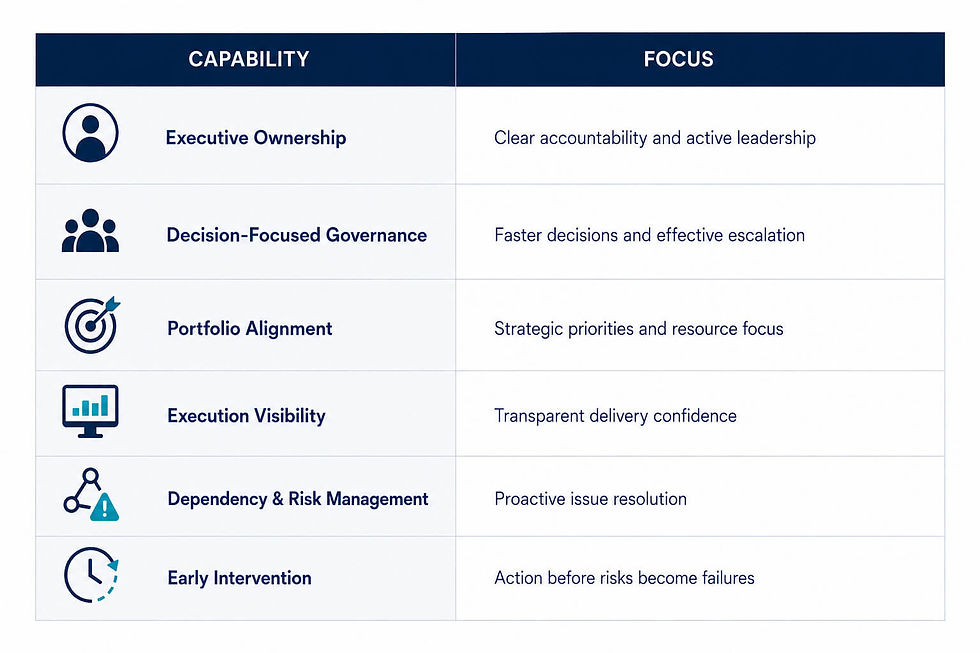
Figure 2: Six Capabilities for Successful Transformation Execution
These capabilities create the foundation required to restore execution confidence, improve decision-making, and maintain control as transformation complexity increases.
1. Re-establish Executive Ownership in Enterprise Transformations
Transformation requires visible executive sponsorship—not symbolic sponsorship, but active leadership.
Executives must own strategic decisions, remove organizational barriers, resolve conflicts between stakeholders, and reinforce accountability across the organization. Without executive ownership, governance becomes procedural rather than effective.
The strongest transformation leaders shape outcomes by ensuring that difficult decisions are made quickly and organizational barriers are removed before they delay execution.
Executive involvement is not about managing day-to-day delivery. It is about creating the conditions where delivery teams can succeed.
2. Simplify Governance
Governance should accelerate execution.
Every governance forum should answer three questions:
What decisions need to be made?
Who is accountable?
What action will follow?
If governance meetings primarily exchange information, they are unlikely to improve transformation outcomes. Effective governance reduces uncertainty, enables faster decisions, and ensures that issues are resolved at the appropriate level.
Effective governance is not about creating more control points. It is about creating the right ones.
3. Align the Portfolio Around Strategic Outcomes
Every transformation initiative should have a clear connection to business strategy.
Leaders should regularly challenge assumptions:
Does this initiative still support our strategic objectives?
Is it still the right priority?
Are resources allocated where they create the greatest value?
Portfolio decisions should also consider what can be stopped or deprioritized to enable higher-impact outcomes. Portfolio discipline prevents organizations from spreading limited resources across too many competing priorities.
Strategic focus creates the capacity required for execution.
4. Create Transparent Delivery Visibility
Executives require concise reporting that reflects reality.
Effective reporting highlights:
Delivery confidence
Critical risks
Cross-program dependencies
Upcoming decisions
Resource constraints
Strategic alignment
Transparency enables earlier intervention and builds trust between leadership and delivery teams.
Effective reporting is not measured by volume. It is measured by confidence in decision-making.
5. Actively Manage Dependencies
Dependencies deserve the same attention as budgets and schedules.
Organizations should continuously assess:
Business readiness
Technology integration
Vendor dependencies
Regulatory milestones
Organizational change
Resource availability
Understanding dependency risk prevents isolated issues from becoming enterprise-wide delays.
Successful transformations treat dependencies as strategic risks that require active ownership and leadership attention.
6. Intervene Early
The longer execution issues remain unresolved, the more difficult recovery becomes.
Organizations should establish leading indicators that identify declining delivery performance before major milestones are missed.
Examples include:
Increasing decision cycle times
Increasing volumes of unresolved risks
Repeated milestone movement
Escalating dependency conflicts
Declining stakeholder confidence
Resource instability
Early intervention protects delivery momentum. Successful transformation leaders do not wait for failure to become obvious. They create the visibility and governance mechanisms needed to act before problems become irreversible.
Control Is a Leadership Capability
One common misconception is that transformation control belongs solely to the PMO. In reality, maintaining control is a shared leadership responsibility.
Maintaining control requires clear roles:
Project teams deliver work.
PMOs coordinate execution.
Business leaders define priorities.
Executives make strategic decisions.
When these groups operate in alignment, governance becomes an enabler of delivery rather than an administrative requirement.
Control is not created through more reporting or more oversight. It is created through clear accountability, effective decision-making, and leadership alignment. Organizations that consistently execute complex transformations create clarity around responsibilities while maintaining shared ownership for outcomes.
The strongest transformation leaders recognize that execution discipline is not a project management function alone. It is a leadership capability.
The Role of the PMO Has Changed
Modern PMOs have evolved beyond reporting coordination and administrative oversight. Their role is increasingly strategic, supporting leadership decision-making, portfolio alignment, and execution visibility.
An effective PMO provides:
Enterprise-wide delivery visibility
Executive decision support
Portfolio governance
Risk and dependency management
Performance insights
Cross-program coordination
Most importantly, it helps leadership maintain confidence that transformation remains under control.
The modern PMO acts as an execution intelligence function. It connects strategy, governance, delivery performance, risks, dependencies, and executive decision-making.
This represents a significant shift from the traditional perception of the PMO as an administrative support function.
The most effective PMOs help organizations answer critical questions:
Are we investing in the right initiatives?
Are strategic outcomes still achievable?
Where is leadership attention required?
What Successful Transformations Do Differently
Across industries, organizations that deliver complex transformations consistently demonstrate several common characteristics.
Governance Is Established Before Complexity Increases
Successful transformations create decision structures, accountability models, escalation paths, and reporting expectations before complexity begins to affect execution.
Decision-Making Remains Fast and Clear
They clarify decision rights, reduce bottlenecks, and ensure issues are resolved by those with the appropriate authority. In complex transformations, delayed decisions often create greater risk than imperfect decisions.
Strategy Remains Connected to Execution
Leaders continuously evaluate whether desired outcomes remain clear, whether initiatives remain aligned, and whether resources are supporting the highest-value priorities.
Transparency Enables Better Decisions
Effective reporting does not mean producing more dashboards. It means providing leaders with the information required to make confident decisions.
Problems Are Addressed Before They Become Failures
The strongest organizations recognize early warning signals and act before unresolved decisions, dependencies, and delivery risks become transformation failures.
Successful transformations are not problem-free. They are better at identifying and resolving problems early.
Most importantly, successful organizations recognize that transformation is not simply about delivering projects. It is about enabling strategic change through disciplined execution.
Key Takeaways
Enterprise transformations rarely lose control because of one major failure.
More often, control erodes gradually through fragmented governance, unclear priorities, slow decision-making, unmanaged dependencies, and limited executive visibility.
Restoring control requires more than stronger project management discipline alone.
It requires:
Decision-focused governance
Strategic portfolio alignment
Transparent execution visibility
Executive ownership
Clear decision accountability
Disciplined execution
Organizations that strengthen these capabilities are better positioned to execute complex transformations, adapt to changing priorities, and deliver lasting business value.
Execution excellence is not achieved by chance. It is built through consistent leadership, disciplined governance, and informed decision-making.
Control is not created through bureaucracy. It is created through disciplined governance, executive ownership, transparent execution, and timely decision-making.
Conclusion
Every enterprise transformation begins with ambition, but only those that maintain execution discipline achieve lasting results. The difference is rarely the strategy itself. It is the organization's ability to retain visibility, make timely decisions, align priorities, and respond quickly when delivery begins to drift.
Control should never be viewed as bureaucracy. It is the mechanism that allows organizations to move faster, make better decisions, and execute with confidence.
For executive teams leading complex transformations, the question is not whether challenges will arise—they inevitably will. The critical question is whether the organization has the governance, leadership, and execution capability to respond before those challenges become transformation failures.
Organizations that build this capability are positioned to consistently deliver strategic outcomes.
Request an Assessment
If your transformation is experiencing delayed decisions, fragmented governance, declining delivery confidence, or competing priorities, it may be time to reassess how execution is being managed.
IVENTUM helps organizations restore control across complex enterprise transformations by creating stronger governance, clearer execution visibility, and the decision discipline required to deliver strategic outcomes.
A focused transformation assessment can identify where control is being lost, prioritize the most critical improvements, and establish a practical roadmap for restoring execution momentum before risks become costly failures.
References
Project Management Institute (PMI)
Research on complexity management, execution capability, decision-making, and transformation success factors.
McKinsey & Company
The Inconvenient Truth About Change Management: Why It Isn’t Working and What to Do About It
Research on transformation challenges, leadership alignment, and sustaining organizational change.
Boston Consulting Group (BCG)
Agile Transformation Management: Managing Large-Scale Change in a Fast-Changing World
Research on large-scale transformation execution, organizational readiness, and sustaining transformation momentum.
