

When Strategy Fails in Execution: Closing the Delivery Gap
Updated: Aug 17
Every enterprise transformation begins with a strategic ambition: improving performance, enabling growth, modernizing capabilities, or creating competitive advantage. Yet translating that ambition into measurable results remains one of the most difficult challenges facing large organizations.
The transition from strategy to execution is where complexity emerges. Multiple initiatives compete for resources, business priorities evolve, and organizations must coordinate decisions across functions, technologies, and leadership teams.
The ability to bridge this gap determines whether transformation efforts create lasting value—or become disconnected collections of initiatives.
Executive Summary
Organizations rarely struggle because they lack ambitious strategies. Executive teams invest significant time defining priorities, approving transformation roadmaps, and allocating substantial budgets to strategic initiatives. Yet many of these transformations fail to achieve their intended outcomes—not because the strategy was flawed, but because execution became disconnected from strategic intent.
The gap between strategy and execution remains one of the most persistent challenges facing enterprise leaders. Priorities shift, governance becomes fragmented, decision-making slows, and portfolios expand faster than organizations can effectively manage them. Over time, visibility decreases, accountability becomes unclear, and transformation efforts lose momentum.
Closing this delivery gap requires more than stronger project management. It demands disciplined governance, effective portfolio alignment, transparent decision-making, and leadership capable of maintaining execution focus across complex environments.
This article explores why organizations struggle to execute strategy, the business consequences of the delivery gap, and a practical framework for restoring alignment between strategic ambition and operational delivery.
Strategy Is Rarely the Problem
Most executive teams understand where they want the organization to go. They define strategic objectives, approve investment plans, and launch transformation programs designed to achieve measurable business outcomes. These strategies are often supported by extensive market analysis, financial planning, and executive consensus.
The difficulty begins after the strategy has been approved. Across large organizations, execution introduces complexity that strategy alone cannot resolve. Business units interpret priorities differently, technology initiatives compete for limited resources, governance structures evolve independently, and decision-making becomes increasingly decentralized.
As complexity increases, individual projects may continue delivering outputs, yet collectively the organization moves further away from its strategic objectives. The transformation progresses, but strategic alignment gradually weakens.
The issue is rarely the quality of planning. It is the organization's ability to maintain alignment as execution progresses.
Understanding the Delivery Gap
The delivery gap is the difference between what leadership intends to achieve and what the organization ultimately delivers. Initially, this gap may be almost invisible. Projects begin on schedule, budgets are approved, teams are fully staffed, and executive reporting indicates healthy progress.
However, as transformations grow, complexity increases. Dependencies emerge across programs, competing priorities multiply, governance forums become overloaded, resource conflicts appear, and decisions take longer.
Over time, teams begin optimizing their own initiatives instead of enterprise outcomes. Without effective coordination, strategic alignment gradually weakens. The transformation continues—but no longer in the intended direction.
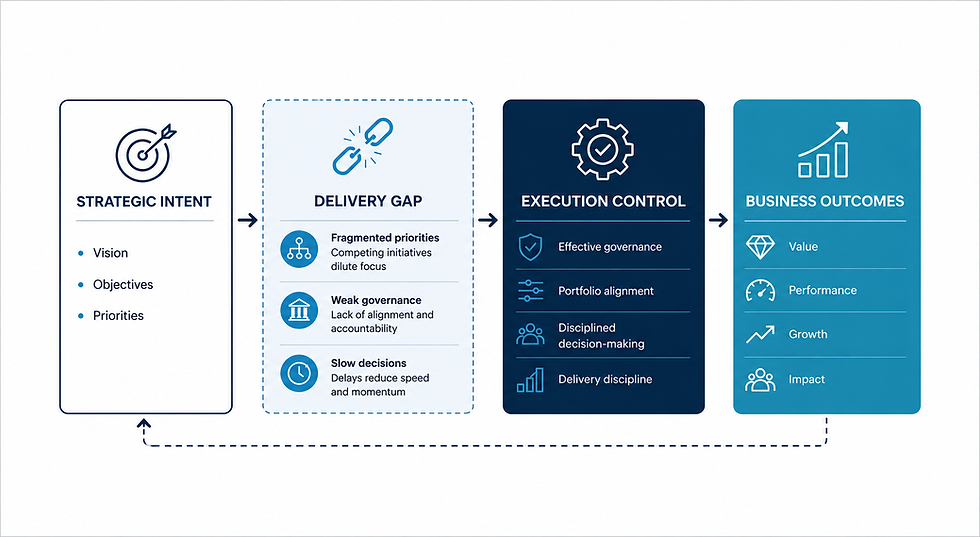
Figure 1. Closing the Strategy Execution Gap
Why Strategy Execution Breaks Down
Organizations experiencing execution challenges often display similar patterns regardless of industry or geography.
1. Too Many Priorities
Everything becomes a strategic priority.
When dozens of initiatives compete for executive attention, none receive sufficient focus. Resources become fragmented, leadership attention is diluted, and critical initiatives progress at the same pace as lower-value work.
Without disciplined prioritization, organizations mistake activity for progress.
2. Weak Portfolio Alignment
Projects are frequently approved individually without considering their collective contribution to strategic objectives. Over time, portfolios become collections of unrelated initiatives rather than coordinated investments.
As a result, leaders struggle to answer fundamental questions:
Which initiatives deliver the greatest strategic value?
Which projects can be delayed?
Where are dependencies creating risk?
Are current investments still aligned with today's priorities?
Without enterprise portfolio alignment, execution becomes reactive rather than strategic.
3. Governance Focuses on Reporting Instead of Decisions
Many governance meetings produce extensive status updates but few meaningful decisions. Project teams prepare reports, executives review dashboards, risks are documented, and actions are deferred.
Effective governance should accelerate execution by enabling timely decisions, removing obstacles, and maintaining strategic alignment—not simply monitoring progress.
4. Decision-Making Slows as Complexity Increases
Large transformations involve numerous stakeholders across business functions, technology teams, vendors, regulators, and executive leadership. As the number of decision-makers grows, accountability often becomes unclear and critical decisions wait for additional information.
Approvals pass through multiple governance layers, escalations become routine, and execution slows considerably. Meanwhile, project teams continue working without clear direction.
5. Success Is Measured by Delivery Rather Than Outcomes
Organizations frequently celebrate milestones such as:
Projects completed
Systems implemented
Budgets spent
Training delivered
Yet these outputs do not necessarily create strategic value. The true measure of execution is whether initiatives achieve the intended business outcomes.
Without outcome-focused governance, organizations can successfully deliver projects while failing to execute strategy.
The Cost of the Delivery Gap
The consequences extend well beyond delayed schedules. Poor strategy execution creates enterprise-wide challenges that affect performance, competitiveness, and organizational confidence.
Common consequences include:
Transformation budgets producing limited business value
Leadership confidence declining due to inconsistent delivery
Resource shortages caused by competing initiatives
Increasing operational complexity
Executive decision fatigue
Reduced organizational agility
Employee disengagement from continuous change
Over time, organizations become trapped in a cycle of launching new initiatives before previous transformations have fully delivered their intended benefits. The result is transformation fatigue without transformation success.
Closing the Gap: A Practical Framework
Organizations that consistently execute strategy share several common capabilities.
Rather than relying on individual project success, they establish systems that maintain alignment throughout the transformation lifecycle.
1. Translate Strategy into Executable Priorities
Strategic objectives should be converted into a manageable number of enterprise priorities.
Each initiative should clearly demonstrate:
Which strategic objective it supports
Expected business outcomes
Success measures
Executive ownership
When priorities are explicit, investment decisions become significantly easier.
2. Align the Portfolio
Effective portfolio management ensures every initiative contributes to strategic outcomes. This requires continuous evaluation—not annual planning exercises.
Organizations should regularly ask:
Does this initiative still support strategic priorities?
Has business context changed?
Are resources allocated appropriately?
Should investments be accelerated, paused, or discontinued?
Portfolio alignment is an ongoing leadership discipline.
3. Build Governance Around Decisions
Governance should create clarity rather than bureaucracy.
Effective governance meetings focus on:
Strategic decisions
Risk resolution
Cross-functional alignment
Dependency management
Resource allocation
Reporting supports governance. Decision-making defines it.
4. Create End-to-End Visibility
Executives require a clear understanding of how strategic objectives connect to programs, projects, milestones, risks, and outcomes.
Visibility should answer questions such as:
Where is execution progressing?
Where are bottlenecks emerging?
Which dependencies require intervention?
What decisions are needed today?
Without enterprise visibility, leadership reacts to problems after they have already impacted delivery.
5. Measure Outcomes, Not Activity
Execution performance should extend beyond traditional project metrics.
Meaningful indicators include:
Strategic objectives achieved
Business capabilities delivered
Portfolio value realized
Decision cycle time
Dependency resolution
Executive confidence
Organizational readiness
These measures provide a more accurate picture of execution effectiveness than schedule variance alone.
The Role of Leadership
Closing the delivery gap is ultimately a leadership responsibility. Governance frameworks, PMOs, delivery methodologies, and reporting tools all support execution—but leadership determines whether they function effectively.
Successful executive teams consistently:
Make timely decisions.
Eliminate competing priorities.
Reinforce strategic alignment.
Empower governance structures.
Hold leaders accountable for outcomes rather than activity.
Most importantly, they recognize that execution discipline is a strategic capability, not an operational detail.
How PMOs Contribute to Strategy Execution
Modern PMOs play an increasingly important role in bridging strategy and execution.
Rather than acting solely as reporting functions, strategic PMOs provide:
Portfolio visibility
Governance coordination
Executive reporting
Dependency management
Resource optimization
Performance insights
Decision support
Their purpose is not to control projects. It is to enable better executive decision-making. When positioned appropriately, the PMO becomes a critical enabler of enterprise strategy execution.
Restoring Alignment in Complex Transformations
Large transformations rarely remain static. Business priorities evolve, markets change, regulatory requirements emerge, and technology advances. Organizations that succeed are not those with perfect initial plans, but those capable of continuously realigning execution with strategic intent.
This requires governance structures that adapt without losing discipline, leadership teams that make informed decisions quickly, and portfolios that remain aligned with changing business priorities.
Execution excellence is therefore not a one-time achievement. It is an ongoing organizational capability.
Key Takeaways
Strong strategies fail when execution becomes disconnected from strategic priorities.
The delivery gap grows as organizational complexity increases.
Portfolio alignment, governance, and decision-making are central to effective strategy execution.
Success should be measured by business outcomes rather than project activity.
Strategic PMOs play a critical role in maintaining enterprise alignment.
Organizations that continuously realign execution are more likely to achieve sustainable transformation success.
Conclusion
Every enterprise transformation begins with a strategic vision. Only a disciplined execution capability turns that vision into measurable business outcomes.
Organizations that consistently outperform their peers recognize that strategy and execution cannot operate independently. Governance, portfolio management, executive decision-making, and delivery excellence must work together as an integrated system that maintains alignment throughout the transformation lifecycle.
Closing the delivery gap is not about increasing oversight or adding additional reporting. It is about creating the clarity, accountability, and control required for complex organizations to execute strategy with confidence.
For leaders responsible for enterprise transformation, the challenge is no longer developing better strategies—it is ensuring the organization can execute them consistently.
Request an Assessment
If your transformation is experiencing delayed decisions, fragmented governance, declining delivery confidence, or competing priorities, it may be time to reassess how execution is being managed.
IVENTUM helps organizations restore control across complex enterprise transformations by creating stronger governance, clearer execution visibility, and the decision discipline required to deliver strategic outcomes.
A focused transformation assessment can identify where control is being lost, prioritize the most critical improvements, and establish a practical roadmap for restoring execution momentum before risks become costly failures.
References
Project Management Institute (PMI)
Pulse of the Profession®: The High Cost of Low Performance
Research on strategic alignment, project success factors, executive sponsorship, and the organizational capabilities required to deliver successful outcomes.
McKinsey & Company
The How of Transformation: Making Transformation Happen
Research on transformation execution, leadership alignment, capability building, and the organizational practices that enable sustainable change.
McKinsey & Company
Unlocking Success in Digital Transformations
Research on transformation performance, execution barriers, governance, and the importance of building organizational capabilities to achieve strategic outcomes.
Project Management Institute (PMI)
The Enterprise PMO as Strategy Execution Office
Research on the role of strategic PMOs in connecting corporate strategy with programs and projects through portfolio management, prioritization, governance, and execution discipline.
Boston Consulting Group (BCG)
Transformation: Delivering and Sustaining Breakthrough Performance
Research on enterprise transformation execution, organizational alignment, leadership commitment, and the capabilities required to deliver and sustain large-scale change.
